Residential Appraisal Workflow (UAD 3.6)
Designed a flexible workflow for UAD 3.6 residential appraisers completing complex, regulated appraisal work, allowing them to work in their preferred order without losing visibility into completeness.
- Figma
- User Research
- Prototyping
- Workflow Design
- Interaction Design

Project Summary
Designed a flexible workflow for UAD 3.6 residential appraisers completing complex, regulated appraisal work, allowing them to work in their preferred order without losing visibility into completeness.
Context
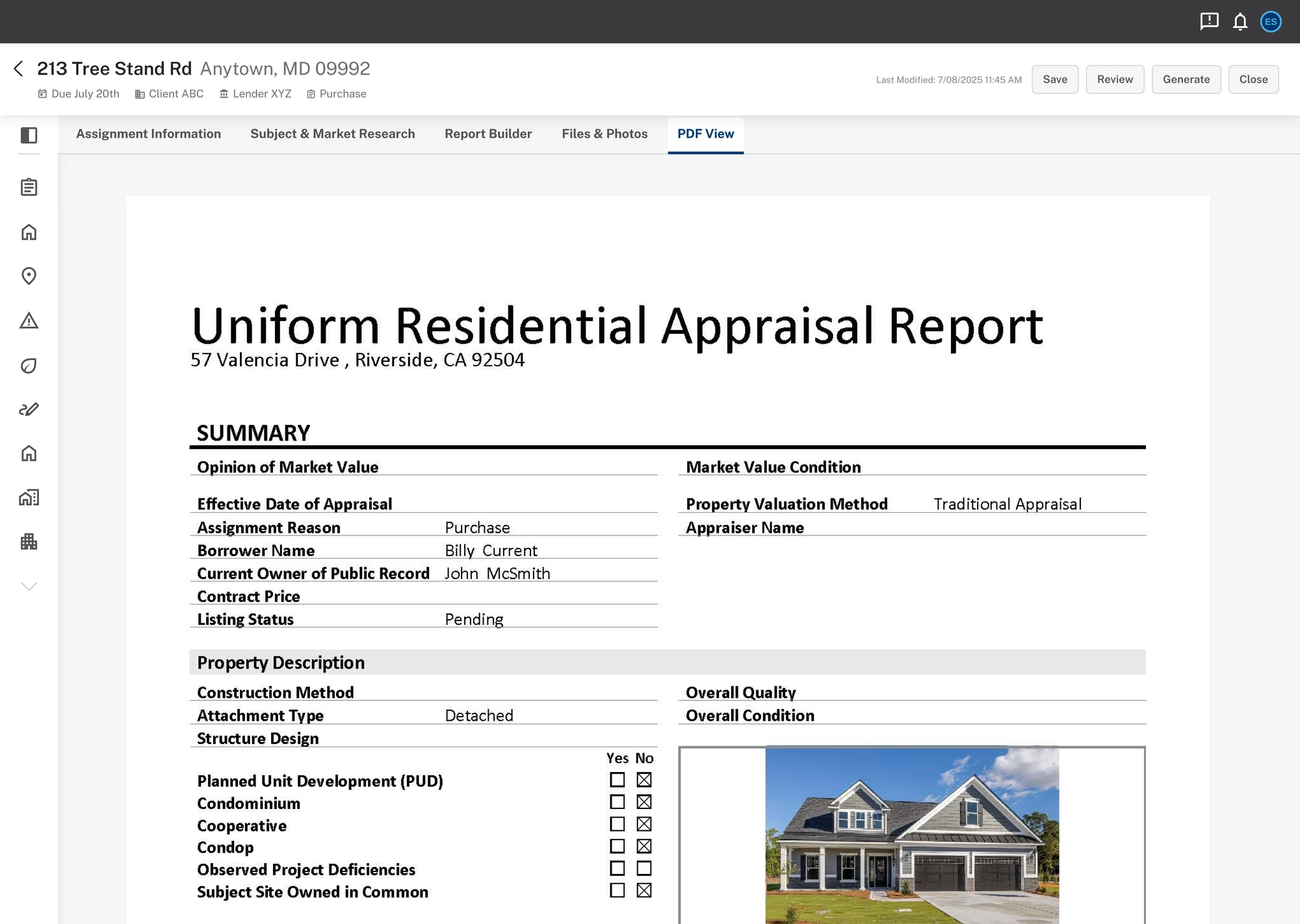
The introduction of UAD 3.6 appraisal requirements increased the size and complexity of residential appraisal forms. Many existing tools responded by enforcing strict, step-by-step workflows that assumed appraisers worked linearly.
In reality, experienced appraisers gather information out of sequence, revisit sections, and work around interruptions. Existing solutions forced users to adapt their process to the software.
Problem
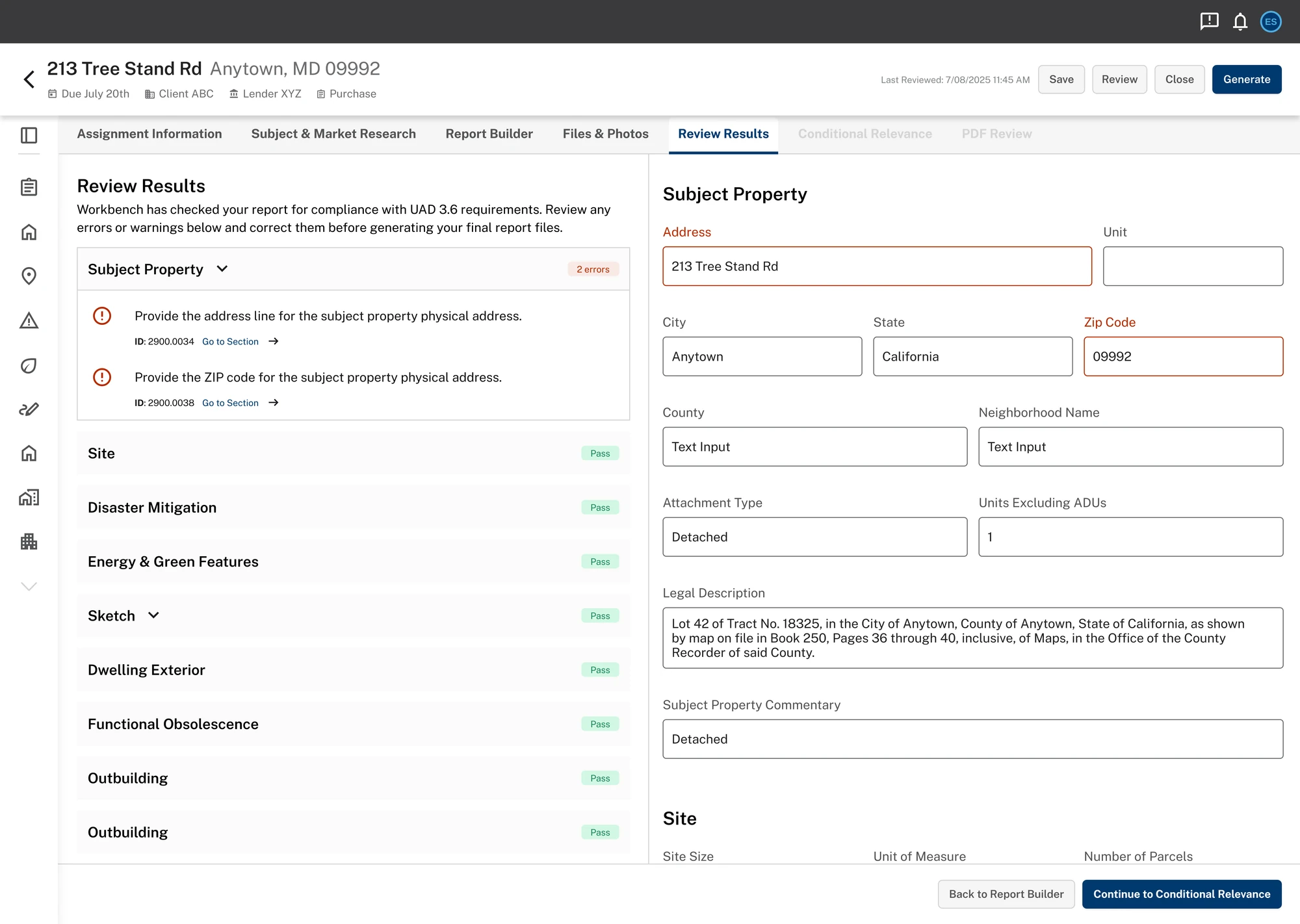
Appraisers needed the freedom to move between sections based on how information became available, while still ensuring the final appraisal was complete and ready for submission.
Most competing tools prioritized enforcement over usability, creating friction, backtracking, and frustration for experienced professionals.
Approach
The workflow was designed around flexibility and situational awareness rather than rigid progression.
The goal was to support non-linear work without sacrificing clarity around what remained unfinished, allowing appraisers to stay in flow while maintaining confidence in overall completeness.
Solution
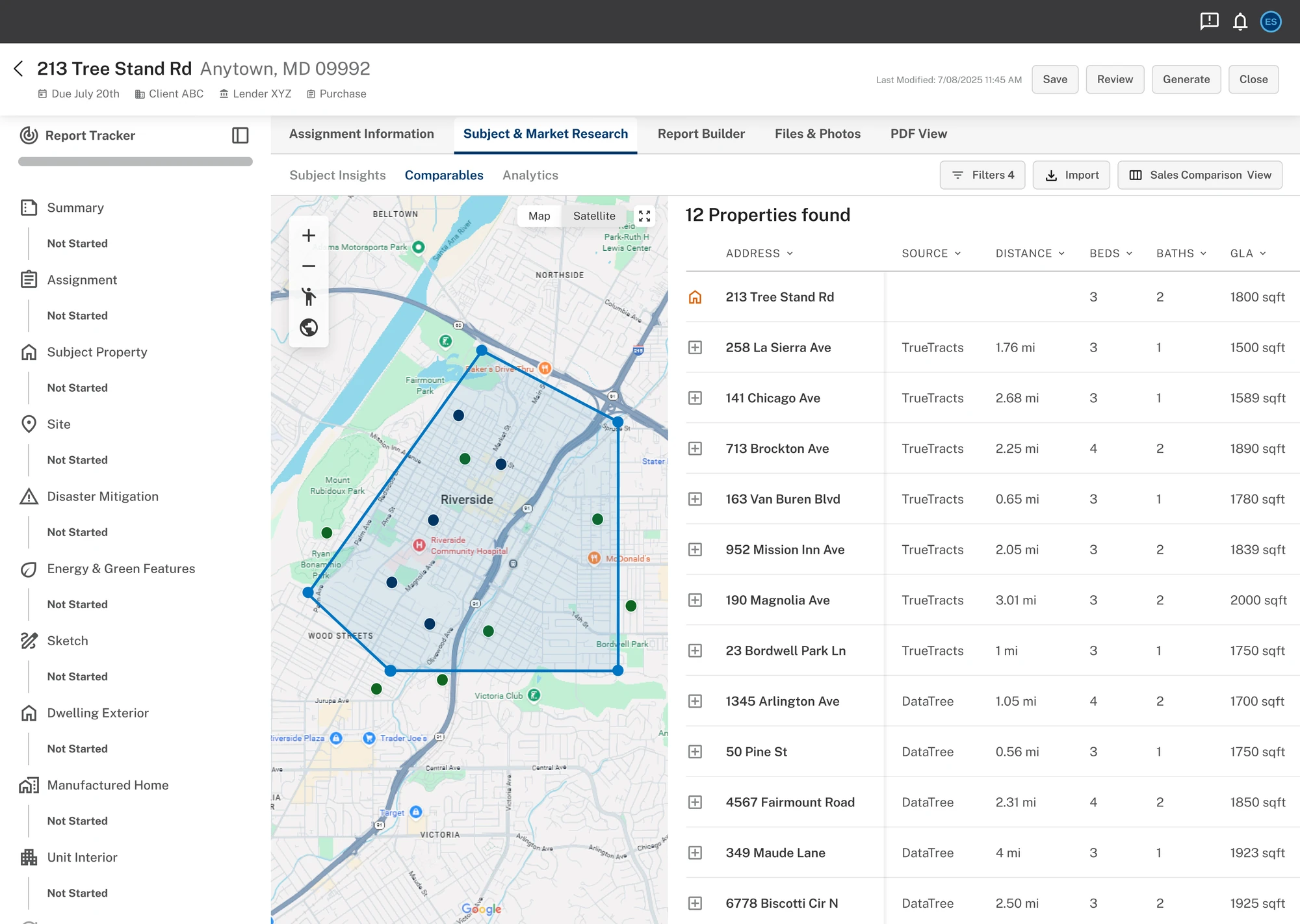
The experience allowed appraisers to navigate freely across all sections at any time.
Clear status indicators showed the completion state of each section at a glance, updating as work progressed. Appraisers could jump between sections without losing context, while always knowing what still required attention.
This reduced cognitive load and eliminated the need for manual tracking or last-minute review passes.
Outcome
- Faster completion for experienced appraisers
- Fewer missed or overlooked sections
- Less friction compared to linear, lockstep tools
- Smooth adoption during the transition to updated requirements
Takeaway
I design workflows that respect how professionals actually work, even under heavy constraints.